



auto warranty prices decoded for smarter coverage choices

I look at pricing through a risk lens: every dollar you're quoted reflects expected repair costs, administrative overhead, profit, and distribution markups. That's the big picture. Your job is to shape those inputs with a few levers - coverage scope, term, deductible, network limits, and where you buy - so the math fits your ownership plan.

What actually drives the price

Pricing is not random. It's a model of probability and severity, adjusted by who's selling it and when.

  • Vehicle profile: age, mileage, make/model, and parts prices. Luxury, turbocharged, and complex infotainment/ADAS systems cost more to insure.
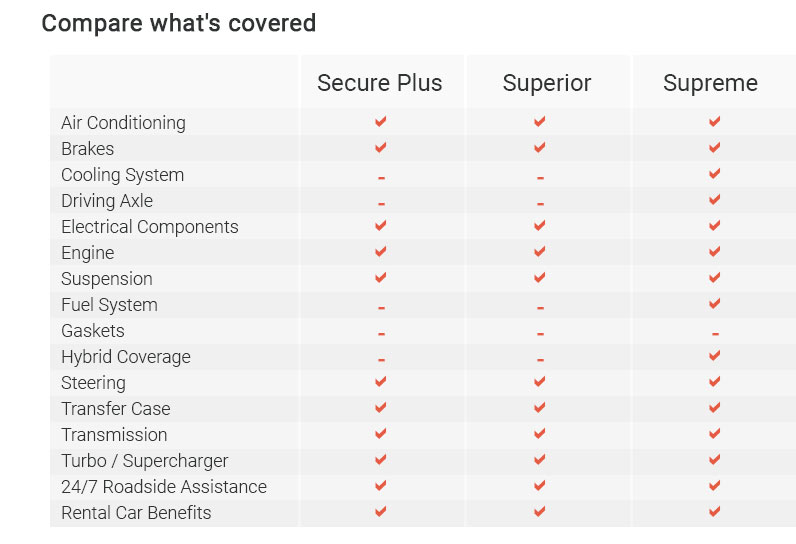
  • Coverage tier: powertrain-only is cheapest; exclusionary ("bumper-to-bumper" style) is highest. More systems = higher expected loss.
  • Term and mileage cap: longer and higher caps raise exposure, and thus cost.
  • Deductible: $0 raises price; $100 - $250 lowers it. Per-visit deductibles beat per-component during multi-part failures.
  • Labor rate caps: a plan that caps at $110/hr will be cheaper than one that follows prevailing rates at $160 - $200/hr, but you'll pay the difference at some shops.
  • Where you buy: dealer markups can be steep; direct plans or manufacturer-backed options can price differently.
  • State rules, taxes, and fees: these change the out-the-door number, not always the underlying risk.
  • Inspection/telematics: proof of condition or data can lower uncertainty and sometimes the quote.
  • Overlap with factory warranties: if your powertrain is still covered, you might not need duplicate protection yet.

Typical price ranges (context, not a promise)

Ranges for mainstream vehicles in the U.S., mid-2020s, vary by model and term.

  • Powertrain-only (3 - 5 years): roughly $700 - $1,800.
  • Mid-tier stated coverage (3 - 5 years): roughly $1,200 - $3,200.
  • Exclusionary "comprehensive" (3 - 6 years): roughly $2,000 - $5,500. Premium/luxury or high-mileage vehicles can run $3,500 - $7,500.
  • Monthly plans: about $70 - $150 per month plus a possible $100 - $400 down payment, subject to term and caps.

Pragmatic caveat: if parts prices, labor rates, or failure trends rise in your region, quotes move quickly. Providers re-rate regularly.

Estimate your own number step by step

  1. Collect facts: VIN, current mileage, maintenance records, and how long you'll keep the car.
  2. Pick a coverage tier: list high-cost systems you actually fear (transmission $3k - $6k, turbo $1.2k - $2.5k, infotainment $800 - $1.5k, EV inverter $2k - $4k). Choose the tier that meaningfully covers those.
  3. Set a term aligned to ownership: don't buy 8 years if you'll sell in 3. Short, targeted terms cut cost.
  4. Select deductible: $100 - $250 often balances premium vs. out-of-pocket. Confirm it's per visit.
  5. Request three quotes: manufacturer-backed, a reputable third-party administrator, and the dealer. Ask for full fee disclosure (admin, surcharge, taxes).
  6. Audit limits: labor rate cap, diagnostic time coverage, OEM vs. aftermarket parts, maximum per claim, and total payout cap.
  7. Compute effective monthly cost: (premium + fees โˆ’ probable prorated refund) รท months you'll actually use it.
  8. Compare to self-funding: if expected failures x costs are lower than your premium, build a repair reserve instead.

A quick, concrete example

Five-year exclusionary plan quoted at $3,200 with a $100 deductible. Assume a 40% chance of one covered repair per year and an average covered repair of $450 (labor/parts after caps). Expected five-year claim count โ‰ˆ 2.0. Expected deductible out-of-pocket โ‰ˆ $200. Expected covered payout โ‰ˆ $900. Your total spend โ‰ˆ $3,400 vs. expected benefit โ‰ˆ $900; net cost โ‰ˆ $2,500. If you own a model with higher average failures or repair severity (say $1,500 average), the math can flip. The value lives in your vehicle's actual risk curve, not the marketing.

Negotiation and timing

  • Timing: quotes often jump at mileage thresholds (e.g., 60k, 75k, 100k). Pricing before a threshold can be meaningfully lower.
  • Overlap strategy: it can be efficient to buy near the end of the factory comprehensive term if rates are favorable, but avoid paying years for duplicated coverage.
  • Refundability: insist on written prorated cancellation terms. That protects you if you sell early.
  • Waiting periods: some plans have 30-day/1,000-mile windows before claims. Plan accordingly.

Red flags and verification

  • Who is the obligor and administrator? Confirm they're clearly named and licensed; check financial backing.
  • Labor rate and diagnostic caps: a low cap makes the plan cheaper but shifts cost back to you at modern shops.
  • Exclusions to read twice: preexisting conditions, overheating, seals/gaskets unless listed, ADAS calibrations, and "wear" items.
  • Claim and payout caps: per visit/per component and total aggregate (sometimes tied to actual cash value).
  • Transfer and cancellation fees: know the amounts, timing, and paperwork required.
  • Maintenance proof: missing oil-change receipts can void a claim. Keep records.

Price versus coverage trade-offs

Lower quotes often rely on hidden constraints: tighter labor caps, reman/used parts allowances, or narrow diagnostic coverage. Higher quotes may loosen these and add rental, roadside, and trip interruption. Pragmatic caveat: if the car shows a current fault or warning light, no credible contract will cover that issue; expect an inspection or a waiting period.

Scenarios to benchmark yourself

  • New, low-mileage mainstream car: rates are moderate; consider buying near the end of factory coverage if pricing doesn't rise.
  • Used car at ~80k miles: prices lift; choose coverage that targets drivetrain and key electronics, and verify labor caps.
  • EV or hybrid: OEM battery warranties are long; third-party coverage may focus on power electronics and cooling. Read exclusions closely.
  • Performance/luxury: higher parts and labor; expect upper-range pricing and stricter terms.
  • High-mile commuter: contracts may cap total payout or deny coverage past a threshold. Confirm eligibility before budgeting.

Checklist before you pay

  1. Obtain the actual sample contract; do not rely on brochures.
  2. Confirm deductible type (per visit) and amount.
  3. Verify shop choice, labor rate policy, and diagnostic coverage.
  4. List covered systems and named exclusions; look for ADAS and infotainment language.
  5. Check claim caps, total payout, and parts policy (OEM vs. aftermarket).
  6. Document fees, taxes, and refund/transfer terms in writing.
  7. Compare three quotes on identical terms and caps.
  8. Calculate effective monthly cost and compare to a repair reserve.

A subtle real-world moment

At a dealership finance desk last week, I opened a third-party quote on my phone for $2,350 while the in-store number was $3,995 for near-identical terms. The finance manager matched most of it after I asked about labor rate caps and diagnostic time. Quiet, simple questions moved the price - not pressure.

Bottom line

Auto warranty prices are risk translated into dollars. Sharpen the inputs you can control, read the contract you'll actually live with, and run the math against your car's real failure profile. If the expected value is there and the limits fit your repair ecosystem, proceed. If not, self-fund and keep meticulous maintenance records. Either path is stronger when chosen deliberately.

https://www.lendingtree.com/auto/extended-car-warranty/
Extended car warranty cost. The cost of your extended vehicle warranty depends on a variety of factors, like the make, model and age of your car ...

https://autopom.com/extended-car-warranty-cost/
The average monthly extended car warranty cost in the United States ranges from $125 to $325. Annually, you can expect to pay between $1,500 and ...

https://www.endurancewarranty.com/learning-center/cost-price/extended-warranty-for-used-cars-cost-finding-the-best-price/
Typically, the average cost of an extended warranty for a used car is around $1,000 per year, but every vehicle and contract is different. For ...


atwratnwm
4.9 stars -1311 reviews